Write a decision charter people can use.
Start with three decisions your group keeps returning to. Say who can make each one and tell people what to do when the usual steps break down.
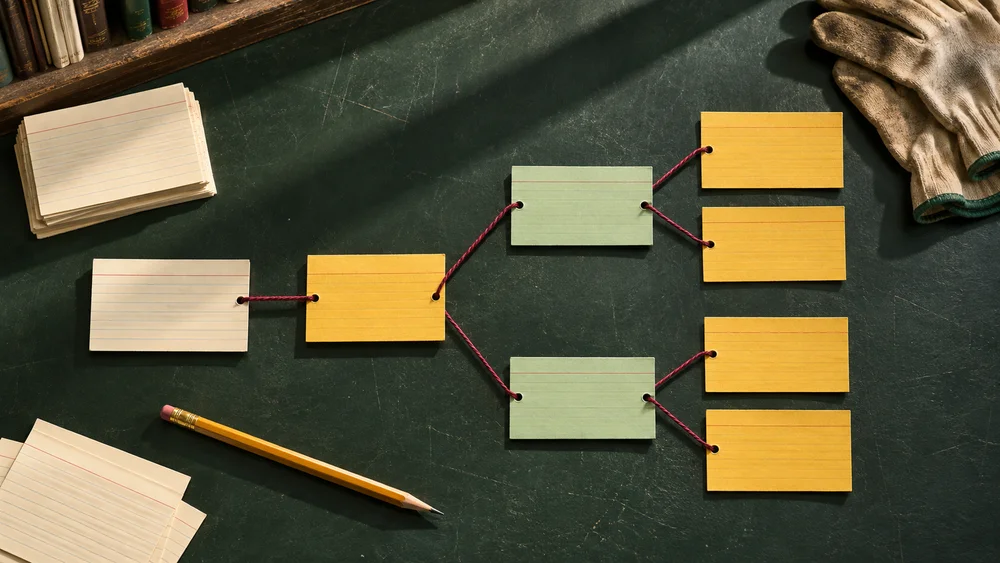
Start with a routine decision
The tool steward can replace a worn-out hand tool within the agreed tools budget. The event circle helps by checking whether a workshop needs that tool. If the steward is away, the steward group handles the referral. Record the scope, consultation, and fallback together.
Set the decision rule before a vote
Recurring opening hours affect everyone, so Maple assigns that decision to the member meeting. The example requires at least six attendees. More Yes than No votes pass, abstentions count toward attendance, and a tie gets referred. Try a vote with five people and a vote with six to see where that difference matters.
Write what happens to objections
For a public workshop, Maple’s event circle asks about practical concerns such as staffing and space. Its local rule refers a proposal if a reasoned objection remains unresolved. The referral gives the group time to hear the concern and decide how to proceed. For a separate example of a group’s approach to objections, see the IETF’s rough consensus note.
Rehearse a difficult day
Pick a decision and remove a person, lower attendance, or raise an objection. Read the result together. If people disagree about who handles the fallback, revise the charter and try the same example again before discussing adoption.